|
What conditions do acupuncture treat?
In the hands of a well-trained
and experienced
practitioner, acupuncture has much broader applications beyond pain relief. The
World Health Organization (WHO) recognizes the use of acupuncture in the
treatment of a wide range of common illnesses including:
Acute sinusitis
Acute rhinitis
Common cold and
flu
Acute tonsillitis
Acute bronchitis
Bronchial asthma (Most
effective in children and uncomplicated conditions.)
Acute conjunctivitis
Central retinitis
myopia
(in children)
Cataracts (without
complications)
Toothache
Post extraction
pain
Gingivitis
Acute and chronic
pharyngitis
-
Gastrointestinal Disorders
Spasms of esophagus
Hiccough
Gastroptosis
Acute and chronic
gastritis
Gastric hyperacidity
Chronic duodenal
ulcer
(pain relief)
Acute duodenal
ulcer
(without complications)
Acute and chronic
colitis
Acute bacillary
dysentery
Constipation
Diarrhea
Paralytic Ileus
-
Neurologic and Musculoskeletal Disorders
Headache and
migraine
Trigeminal neuralgias
Facial palsy (early stage,
i.e., within 3-6 months)
Pareses following a
stroke
Peripheral neuropathies
Sequelae of poliomyelitis
(early stage, i.e., within 6 months)
Meniere's disease
Neurogenic bladder
dysfunction
Nocturnal enuresis
(bedwetting)
Intercostal neuralgia
Cervicobrachial
syndrome
Frozen shoulder
Tennis elbow
Sciatica
Low back pain
Osteoarthritis
Carpal tunnel
syndrome
Back and knee
pain
Fibromyalgia
Chronic fatigue
Sports injuries and
pains
-
Reproductive & Gynecological Conditions
Premenstrual
syndrome
Dysmenorrhea (menstrual
cramps)
Spotting and
excessive
bleeding
Amenorrhea (loss of
menstrual period)
Impotence
Infertility
Incontinence
Prostatis
-
Mental Emotional Problems
Stress
Anxiety
Depression
Insomnia
The World Health Organization
Interregional Seminar compiled the above list of illnesses that may benefit from
acupuncture treatment. The list is only a partial list and is based on clinical
experience, and not necessarily on controlled clinical research. The inclusion
of specific diseases are not meant to indicate the extent of acupuncture's
efficacy in treatment, since all conditions may vary in severity and response.
Source: World Health
Organization. Viewpoint on Acupuncture. Geneva, Switzerland: World Health
Organization, 1979.
RETURN TO
TOP
What is Acupuncture?
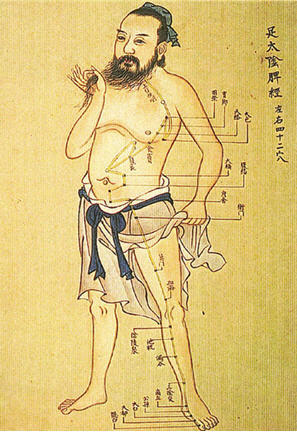 Acupuncture is the gentle
insertion of very fine needles into specific points on the body. This process
stimulates movement of energy within the body, allowing natural healing to take
place. These points are selected based on over 3,000 years of experience in
China. Acupuncture is the gentle
insertion of very fine needles into specific points on the body. This process
stimulates movement of energy within the body, allowing natural healing to take
place. These points are selected based on over 3,000 years of experience in
China.
Modern medical science finds
that acupuncture helps to prevent illness by improving the overall functioning
the body's immune and organ systems.
Acupuncture is helpful for:
Treating existing illnesses
and injuries.
Preventing both recurrence
of illnesses and new illness.
Improving overall health.
How does Acupuncture work?
Traditional Chinese Medicine Theory
The
Classical Chinese explanation is that energy (Qi) flows in channels (meridians)
throughout the body and over its surfaces. These channels are rivers of energy,
which are referred to as meridians. The Chinese have identified 71 meridians in
the human body, which is a basic energy map for all people. The meridians are
often compared to a series of interconnected highways. Each of the major organs
in the body is associated with its own meridian. Through the network of
meridians, the internal organs are connected to certain areas and parts of the
body including: the muscles, bones, joints, and also other organs.
The
Chinese believe that health is a manifestation of balance, both within the body
itself and between the body and the external environment. When the body is
internally balanced and in harmony with the external environment, Qi flows
smoothly through the meridians to nourish the organs and tissues. If an
obstruction occurs in one of the meridians, the Qi is disrupted and cannot flow
properly. When the Qi cannot flow smoothly or is forced to flow in the opposite
direction, the body's innate balance is disrupted and illness results.
Acupuncture points are the specific points on the meridians wherethe Qi is both
concentrated and accessible. Acupuncture engages the Qi by inserting needles at
these specific points, the goal being to restore the proper flow of Qi. As the
body regains its natural balance, well-being returns.
Acupuncture and Modern Science
To the
human body, acupuncture needles are a physical stimulus. In Western science, a
stimulus is defined as a detectable change in either the external environment or
within the body itself. When the body detects change, it produces a response.
Although acupuncture is not yet fully understood by Western science, with modern
technology scientists can now actually begin to "see" the body's response to
acupuncture. For example, using an MRI (a very sophisticated x-ray), researchers
have shown that when a needle is inserted at specific acupuncture points on the
body, corresponding changes occur in the brain.
In the
West, acupuncture is most well-known for its ability to relieve pain, so the
majority of research thus far has been done in this area. Acupuncture points are
now believed to stimulate the central nervous system (the brain and spinal cord)
to release pain-relieving chemicals into the muscles, spinal cord and brain.
Acupuncture may also stimulate other chemicals to be released by the brain,
including hormones that influence the self-regulating system of the body.
Quit Smoking
Smoking harms your heart.
Smoking harms your baby.
Smoking causes cancer.
About 90% of America's 51
million smokers want to quit, but only 20 to 30% manage to do so permanently. It
is really difficult to make a decision to quit smoking, and it not very easy to
find a qualified professional to help you.
If you have tried to quit
smoking, you know how hard it can be. That is because nicotine is a very
addictive drug. For some people, it can be as addictive as heroin or cocaine.
Within seconds of taking a puff of smoke, nicotine travels to the brain. It
tells the brain to release chemicals that make you want to smoke more. Quitting
is hard. Usually people make 2 to 3 tries, or more, before finally being able to
quit. Studies have shown that each time you try to quit, you will be stronger
and will have learned more about what helps and what hurts.
Nevertheless, anyone can quit
smoking. It does not matter about age, health, or lifestyle. The decision to
quit and your success is greatly influenced by how much you want to stop
smoking.
Acupuncture is probably the
most widely accepted complementary treatment for stopping smoking. It ELIMINATES
your CRAVINGS for tobacco. The quit smoking with acupuncture treatments utilize
special ear points for addiction elimination.
Weight Loss
Do you feel like you've tried
it all? After countless diet and exercise plans
you're still struggling to lose those extra pounds. Or are you in a constant
battle to keep the weight from creeping back as soon as you relax your strict
eating habits? Then maybe acupuncture could be the key to your weight loss
success.
Acupuncture is a traditional Chinese medical practice of placing fine, filiform
needles into the body at specific points for therapeutic effect.
According to Dr. Neemez Kassam, Associate Professor of Asian Medicine at the
Canadian College of Naturopathic Medicine, there are two schools of thought on
how acupuncture works: The Western perspective whereby acupuncture releases
endorphins which produce natural euphoric activity, and the traditional approach
where acupuncture regulates the flow of QI, or energy, bringing the body back
into balance.
Around for more than 2,500 years, this relatively painless healing technique has
become more and more popular in Canada over the past two decades, and is now
recognized as a safe and effective treatment for everything from migraine pain
to infertility, and is often used to help with weight loss and weight
management.
To incorporate acupuncture into your own life, you must first have a
consultation with your chosen practitioner to clarify the reasons for your
weight problem, whether physiological due to issues such as a slow metabolism,
menopause or thyroid problems, or behavioural due practices like overeating and
binge eating.
Summary
Traditional Chinese medicine
has been around for thousands of years, and has provided us with a unique and
holistic approach to help prevent and treat disease.
Western science
and Traditional Chinese Medicine ultimately rely on the body's natural healing
ability to maintain health and protect against disease. Both have the same goal
of helping a person stay healthy. Western science tends to use drugs and surgery
as needed while acupuncturists tend to use gentle needling and herbs. A
combination of both systems creates an ideal environment of health and healing.
RETURN TO
TOP
|