Acupuncture raises practical questions long before philosophical ones, so we’ve answered the practical set up front: what a first session is like, what it tends to help with, what you’ll pay in Calgary, and how insurance fits in.
Acupuncture in Plain Terms
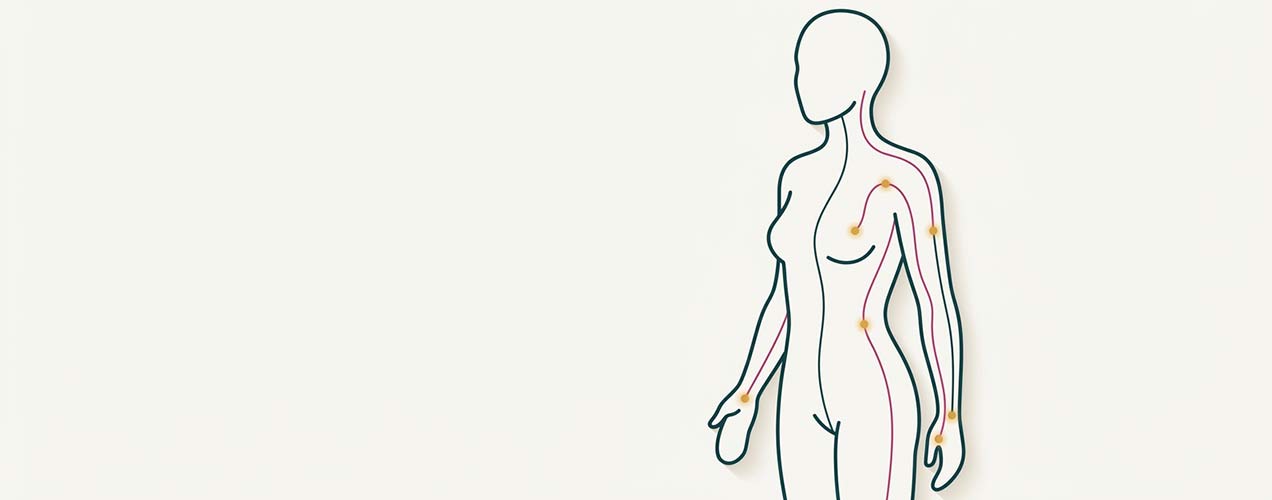
Acupuncture is one branch of traditional Chinese medicine. A practitioner places very thin, single-use sterile needles at specific points on the body to prompt a response. The traditional explanation describes this as guiding the flow of qi along channels called meridians. Alberta’s regulator frames it in physiological terms as well: stimulating these points produces measurable responses in the muscles, spinal cord and brain, along with biochemical and hormonal changes that can shift how the body registers symptoms, pain in particular.
It is worth separating two things people often blur together. Needling breaks the surface of the skin and is a restricted activity that Alberta regulates. Acupressure uses firm touch on the same points and does not. They draw on the same map of the body, but only one involves needles, and only one requires a registered practitioner to perform.
Why People in Calgary Try It
Most people arrive with a specific complaint rather than a general interest in wellness. The common reasons are chronic pain, tension headaches and migraine, stress, trouble sleeping, and stiffness or injuries that have not settled with other care. None of that should be read as a promise. Acupuncture is studied unevenly across conditions, and the honest summary is that evidence is stronger for some uses, such as chronic pain and migraine, than for others.
A regulated profession in Alberta
Alberta is one of only three provinces in Canada, alongside British Columbia and Quebec, that regulate acupuncture as a standalone health profession. The College of Acupuncturists of Alberta oversees the field under the Health Professions Act, and as of 2024, it listed just over 950 regulated members across the province.
For the detail on how needling is thought to work and what the research does and does not support, see how acupuncture works and what it treats.
Session Prices Around the City
Prices vary by practitioner, length of session and what is included, so treat the figures below as the general shape of the Calgary market in 2025 to 2026 rather than a quoted rate. A first visit usually costs more than later ones because it includes a longer intake and assessment. Community-style clinics, which treat several people in a shared space, tend to sit at the lower end.
| Type of visit | Typical Calgary range | Details |
|---|---|---|
| Initial visit (intake + treatment) | $85 to $155 | Longer, includes assessment |
| Follow-up session | $70 to $95 | Shorter check-in + treatment |
| Cupping or gua sha | $30 to $60 | Often added to a session |
| Herbal consultation | $50 to $65 | Formulas billed separately |
| Package of sessions | Varies | Some clinics discount blocks |
Insurance and Coverage in Alberta
This is the part that catches people out, so it is worth being clear. The Alberta Health Care Insurance Plan does not cover acupuncture. The province lists services from providers other than a physician, acupuncturists among them, as outside the public plan. In practice, acupuncture is paid for in one of a few ways.
- Out of pocket, paid directly at the time of service.
- Through an extended health or employer benefits plan. Coverage commonly runs around 70 to 100 percent of the fee or a fixed dollar amount per year, and many clinics can direct bill, so you only pay the balance.
- Through a workplace or accident claim. For a workplace injury, WCB typically funds an initial assessment plus seven treatments with a registered acupuncturist. For a motor vehicle injury, Alberta’s protocol sets a fund of up to $250 for care with a registered acupuncturist.
Two things to check before you book
First, confirm your plan lists acupuncture specifically, since some bundle it with other paramedical care and some exclude it. Second, check whether reimbursement requires a registered acupuncturist (R.Ac), as most insurers will only pay for a regulated provider. When in doubt, your insurer is the final word on what your own plan allows.

How to Pick a Practitioner
Because the profession is regulated, you can verify someone before you book. Only registered members may use the protected titles, which include R.Ac (registered acupuncturist) and Dr.Ac (doctor of acupuncture). A valid practice permit has to be displayed where treatment is given, and the College keeps a public register you can search. A few sensible checks:
- Confirm the practitioner is registered and in good standing on the College’s public register.
- Ask about experience with your particular concern, and roughly how many sessions they would expect.
- Check that needles are single-use and sterile. Under provincial rules they always should be.
- Ask about fees, direct billing and whether you will get a receipt suitable for your insurer.
If you are weighing where to go by part of the city, where to find acupuncture across Calgary covers the quadrants and what to look for.
Questions People Ask First
Most people feel a small pinch at most, and often nothing, when a needle goes in. A dull ache, warmth or heaviness around the point is common and is usually described as odd rather than painful.
It depends on the issue. An acute problem might respond in one or a few visits, while a long-standing one is often worked through over a series. A practitioner should give you a rough plan after the first assessment.
No. The public plan does not cover it. Coverage comes through extended health or employer benefits, or through a workplace or accident claim, otherwise it is paid out of pocket.
Check the public register kept by the College of Acupuncturists of Alberta. Registered members use titles such as R.Ac or Dr.Ac and must display a current practice permit.
Registered practitioners use pre-sterilized, single-use needles, which removes the risk of passing on an infection between patients. Minor side effects, such as slight bruising at a point can happen.
References
Regulation, titles and member numbers: College of Acupuncturists of Alberta. Public coverage and what the provincial plan excludes: Government of Alberta and the occupational profile at alis.alberta.ca. Price ranges reflect publicly posted Calgary clinic rates for 2025 to 2026.