What Tui Na is, how it differs from a Swedish or deep-tissue massage, what people turn to it for, and one thing about regulation in Alberta that is worth knowing before you book.
Walk into a clinic asking for Chinese massage in Calgary and you will usually be offered Tui Na. It looks like a massage, and it is one, but it grows from a different root than most people picture, and Calgarians searching for Chinese medical massage are often surprised by how different it feels. What is Tui Na actually? How it compares with Western bodywork, and the regulatory detail that sets massage apart from acupuncture in this province.
What Is Tui Na?
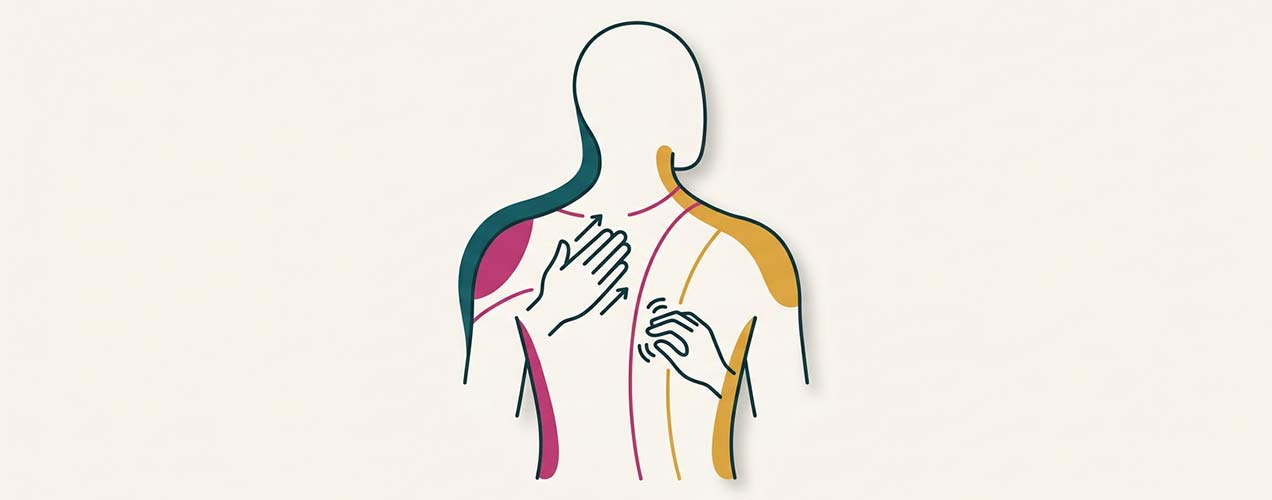
Tui Na (pronounced “twee nah”) is a hands-on therapy that has been part of Chinese medicine for around two thousand years. The name comes from its two core actions: tui, to push, and na, to grasp or squeeze. Practitioners work with fingers, knuckles, palms and sometimes elbows, using kneading, rolling, pressing and rhythmic compression along the same channels, or meridians, that acupuncture uses.
It sits inside Chinese medicine as a sibling to acupuncture rather than a spa add-on. Where an acupuncturist reaches a point with a needle, a Tui Na practitioner reaches it with pressure, and the two are often used together along with herbs, cupping or moxibustion. The traditional aim is the same: to keep qi, the body’s vital energy, moving freely through the meridians and to clear what Chinese medicine reads as blockages. That overlap is why people looking for Calgary Chinese massage often find it offered in the same clinics as acupuncture, by practitioners trained in both.
A close relative: acupressure
Acupressure is the lighter cousin of Tui Na. It applies finger pressure to the same points an acupuncturist would needle, without any needles, and acupuncturists sometimes use it during or instead of a needle treatment. If the idea of needles puts you off, acupressure offers point-based work in a gentler form.
How It Differs from Swedish and Deep-tissue Work
The clearest way to see the difference is side by side. Swedish massage was built in 19th-century Europe around the anatomy of muscles and circulation. Tui Na was built around meridian theory. That difference in thinking shows up in how a session feels.
| Tui Na (Chinese) | Swedish / deep-tissue | |
|---|---|---|
| Goal | Move qi along meridians; address a specific complaint. | Relax muscles and improve circulation; ease tension. |
| Technique | Focused, repetitive pressure on points; stretching and joint moves. | Long gliding strokes, kneading, flowing over whole muscle groups. |
| Feel | Brisker and more targeted; can feel firm or invigorating. | Smooth and calming; built for relaxation. |
| Setup | Often done through loose clothing, no oils. | On bare skin with oil or lotion. |
| Roots | Chinese medicine and meridian theory. | European anatomy and physiology. |
What People Turn to It For
People usually come to Tui Na with a specific issue rather than for a general unwind. The common reasons are musculoskeletal: back and neck pain, stiff or sore shoulders, and the aches that come with repetitive strain. It is also sought for tension, limited mobility and stress-related complaints, and it is often paired with acupuncture in a single treatment plan.
These are common motivations, not guarantees. As with any manual therapy, results vary from person to person, and Tui Na is best thought of as one tool within Chinese medicine rather than a fix for any single condition. A session typically runs thirty minutes to an hour, and for an ongoing problem, a short series of weekly visits is a common pattern.
Foot Reflexology, and Where It Fits
Foot reflexology often shares a clinic with Chinese massage, but it is its own thing. It works from the idea that points on the feet (and hands and ears) map to other parts of the body, and that pressing them can have an effect elsewhere. It is point-based like acupressure, but it is not the same as a full-body Tui Na treatment and should not be confused with it. Many people find it relaxing in its own right. If you book it, book it knowing it is a distinct modality.
Finding It in Calgary, and the Regulation Gap
Here is the part many people do not realise, and it is the most important thing on this page. Acupuncture is a regulated health profession in Alberta, with a College, protected titles and a public-protection mandate. Massage therapy is not. As of 2025, the profession is still working toward provincial regulation, with an application under review by the Minister of Health, but no College yet exists.

What the regulation gap means for you
Because massage is self-regulated in Alberta, the title “RMT” is not yet legally protected – in principle anyone can use it. Wherever you look, from the downtown core to massage in south Calgary along the Macleod Trail clinics, the same rule applies: the title carries less weight here than association membership does. Your practical safeguard is to look for membership in a recognised association such as the Natural Health Practitioners of Canada (NHPC), CMMOTA, CRMTA or the MTAA. Association members carry insurance and meet a training standard, and crucially, insurers will usually only reimburse massage from a member of a recognised association.
So, the check here is different from acupuncture. For an acupuncturist, you verify registration with the College of Acupuncturists of Alberta. For a massage therapist, you confirm association membership and ask about training and insurance directly. If a single practitioner offers both acupuncture and Tui Na, the acupuncture side is the regulated one.
For the regulated side of Chinese medicine, see how acupuncture works and what it treats and for help locating a practitioner by area, where to find acupuncture across Calgary.