If you have been waking up with a stiff neck, feeling wired but exhausted, or struggling to switch off at night, you are not alone. Here is how traditional Chinese medicine can help reset the balance.
The Problem with Endless Scrolling
The average Canadian adult now spends over five hours a day on their phone outside of work, while children log more than seven hours of daily screen time. Nearly half of young people spend four to six hours online each day, and one in three report being online even longer. Only about one in five youth follows the national guideline of limiting recreational screen time to two hours a day.
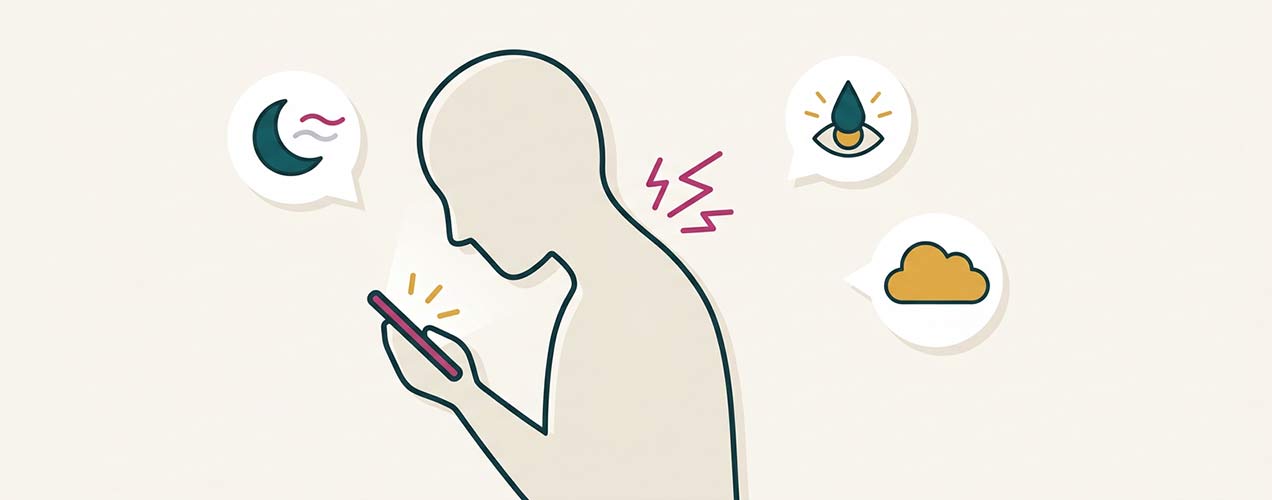
The result is a constellation of symptoms that have become so normal we barely notice them: a tight neck and shoulders, dry and tired eyes, trouble sleeping, a vague sense of restlessness, and the feeling of being mentally foggy even after a full night’s rest. Screens are not going anywhere, but the toll they take does not have to be permanent. Traditional Chinese medicine offers a practical, research-backed toolkit for restoring balance.
Online Casinos, Gaming, and Endless Scrolling – It All Adds Up
The rise of online casinos, gaming platforms, and streaming services has made it easier than ever to stay engaged for hours. In Alberta alone, nearly a quarter of the population has gambled online in the past month. Nationally, the online gambling market grew by over ten percent year over year, with Ontario reporting roughly 1.28 million active online players in a single month.
While this is convenient entertainment, it also means more time hunched over screens, more stimulation for an already overloaded nervous system, and less time for the body to rest and recover. The issue is not the activity itself, it is the duration and the intensity of the engagement. Whether you are working late, scrolling social media, or playing at an online casino, the physiological effect is the same: your neck stays cranked forward, your eyes stay fixed, and your nervous system stays in a state of low-grade alert. TCM offers practical tools to help you stay balanced.
Your Neck and Back Are Begging for a Break
Tech neck, the forward-head posture from staring down at phones, has reached what some clinicians call epidemic proportions. The Canadian Chiropractic Association found that over sixty percent of Canadians get neck pain from excessive screen time, rising to eighty-four percent among students on smartphones. More than four hours of daily screen use sharply raises the risk of chronic neck pain.
In TCM terms, this is a stagnation of qi and blood in the neck and shoulder channels: the muscles tighten, the flow slows, and pain follows. Acupuncture has been shown to reduce neck pain significantly, and 2025 research found several methods outperform conventional treatment for myofascial neck and shoulder pain. Tui Na, the Chinese massage that works the same meridians without needles, releases tension and restores mobility, and Calgary practitioners often pair the two in one session.
Why You Feel Wired but Completely Drained
There is a particular exhaustion that comes from too much screen time. It is not the tiredness of physical labour but the fatigue of a nervous system kept on alert all day by notifications, bright light, and constant multitasking. In TCM this is agitation of the Shen, the mind that resides in the Heart: when it is disturbed, sleep suffers, anxiety rises, and you cannot switch off, leaving racing thoughts at bedtime, irritability, and a short temper.
Research backs what TCM has described for centuries. Acupuncture calms the nervous system by modulating brain regions, neurotransmitters, and the endocrine system. A 2025 study found electroacupuncture eases anxiety-like behaviour by reducing oxidative stress in the brain, and another confirmed acupuncture helps treat depression and anxiety through its effect on the vagus nerve. Practitioners use points on the Heart and Pericardium meridians to settle the Shen, lower cortisol, and prompt serotonin and dopamine, leaving you calm and clear-headed rather than sedated.
Yes, Your Screen Habit Messes with Your Gut Too
Stress and screens travel together, and so do stress and digestion. In TCM, the Spleen and Stomach turn food into energy, or qi. Eating at your desk, skipping meals, or eating while scrolling weakens Spleen Qi, and the result is bloating, poor appetite, fatigue, and irregular digestion. Stress doesn’t care where it comes from – a deadline, a news feed, or an online casino lobby. The effect on your Spleen Qi is identical.
Acupuncture has been used for digestive disorders for thousands of years. A 2024 randomized controlled trial found twelve weeks of acupuncture significantly eased post-meal distress, with benefits holding through a twelve-week follow-up, and it has a clear effect for IBS alongside anxiety and depression. It works by modulating the autonomic nervous system, lowering low-grade inflammation, and rebalancing the gut-brain axis. A good practitioner asks about your digestion at intake because it reveals something important about the state of your Qi.
What Tools Does TCM Actually Use?
Acupuncture is the best-known method, but it is one branch of a wider system. A practitioner may draw on several tools depending on what they find in your intake:
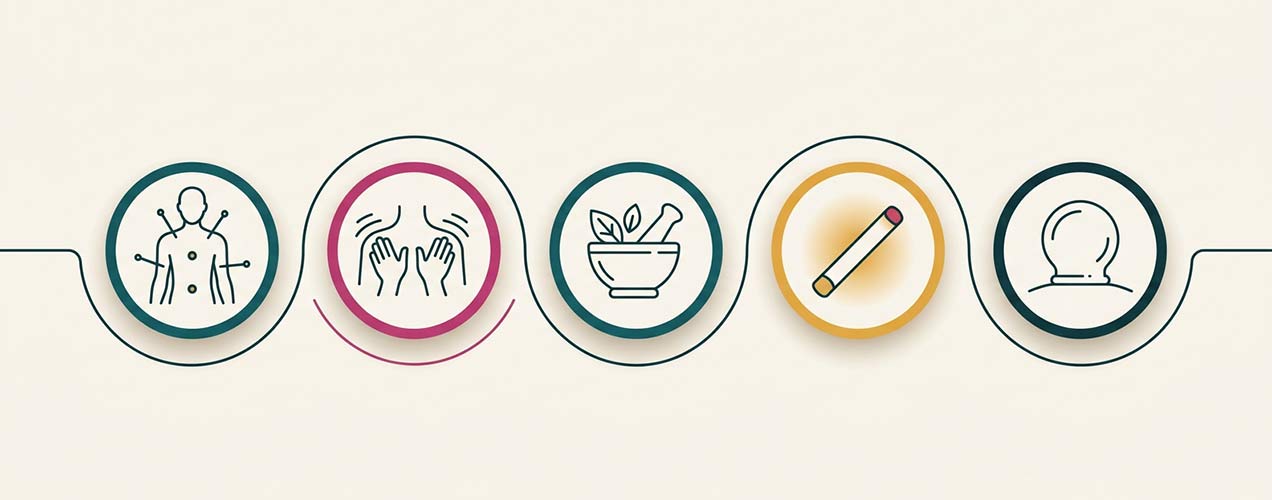
- Acupuncture. Fine, single-use needles at specific points to stimulate the nervous system and restore flow.
- Tui Na. Chinese therapeutic massage, firm, targeted work through clothing, without oils. Excellent for releasing neck and shoulder tension.
- Chinese herbal medicine. Individualized formulas, usually combinations of plant ingredients, prescribed to match your pattern rather than a single symptom.
- Moxibustion. Burning mugwort near points to warm and invigorate, helpful for fatigue and cold, stagnant conditions.
- Cupping. Suction cups placed on the skin to move stagnation and improve local circulation.
These methods are rarely used in isolation. A session might pair acupuncture with cupping, or follow needling with a herbal formula to continue the work at home. The logic comes from how TCM frames health: as a state of balance that treatment is meant to restore, not a single broken part to fix.
Small Steps, Big Difference
TCM is not a quick fix, it is a philosophy of living in harmony with your environment. Small adjustments make a real difference over time:
- Take regular screen breaks. The 20-20-20 rule works: every twenty minutes, look at something twenty feet away for twenty seconds.
- Stretch your neck and shoulders throughout the day. Even a few seconds of gentle movement helps.
- Eat regular, warm, nourishing meals. In TCM, cold and raw foods weaken Spleen Qi.
- Protect your sleep. Screens suppress melatonin production, so try to put them away at least an hour before bed.
Acupuncture helps reset the system, but the habits you build between sessions matter just as much.
Ready to Feel Better?
Screen fatigue is real, and it is not something you have to just live with. Whether your neck is tight, your mind is racing, or your digestion is off, a registered acupuncturist can create a plan tailored to you. The first step is a consultation, a conversation about what is going on and how TCM might help. Book one, and give your body the reset it has been asking for. If you’re spending hours on screens, whether for work, streaming, or online casinos, your body is sending you signals. Listen to them.