The traditional explanation, the physiological one, and an honest look at where the research is strong, where it is mixed, and what to expect from a session.
Acupuncture is among the most studied therapies in complementary medicine, yet it still sits in a curious place: widely used, partly understood, and uneven in how well it works from one condition to the next. We cover both ways of explaining how it works and what the evidence says.
How the Effect Is Explained
There are two accounts of what acupuncture does, and they are not really competing so much as describing the same thing in different languages.
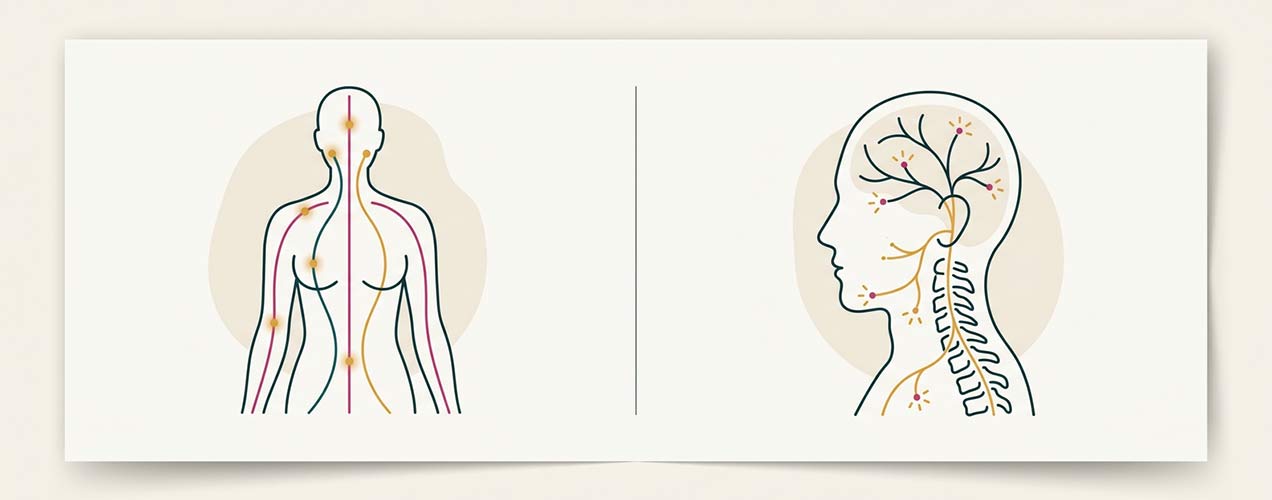
The traditional account comes from Chinese medicine. It describes a vital energy called qi that flows through channels, or meridians, across the body. Illness is read as a blockage or imbalance in that flow, and needling specific points is meant to restore it. This is the framework practitioners have used for more than two thousand years, and it still guides where needles go.
The physiological account comes from modern research. Inserting a needle is a physical stimulus that the nervous system registers and responds to. Studies show that needling prompts the release of endorphins, the body’s own pain-relieving chemicals, along with neurotransmitters such as serotonin and dopamine, and neuroimaging work indicates it shifts activity across pain-processing regions of the brain. Alberta’s regulator describes it in the same terms: stimulation producing neurophysiological responses in the muscles, spinal cord and brain, plus biochemical and hormonal changes.
The short version
Traditional medicine explains acupuncture through the flow of qi along meridians. Modern physiology explains it as needling stimulating nerves to release endorphins and other chemicals and to alter how the brain processes pain. There is no single agreed mechanism, and different effects likely involve different pathways.
What the Research Supports
The honest summary is that the evidence is stronger for some uses than others. The U.S. National Center for Complementary and Integrative Health (NCCIH), part of the National Institutes of Health, is a useful neutral reference here. The table below reflects its reading of the research.
| Condition | Evidence | What reviews suggest |
|---|---|---|
| Chronic low-back pain | MODERATE | Judged moderate quality; included among first-line non-drug options in a 2017 American College of Physicians guideline. |
| Migraine prevention | MODERATE | Moderate-quality evidence it can reduce how often migraines occur, with fewer dropouts than drugs in head-to-head trials. |
| Tension headache | MIXED | Moderate-to-low evidence it may cut the frequency of tension headaches. |
| Knee / hip osteoarthritis | MIXED | More effective than no treatment; the gap over sham acupuncture is smaller. Guidelines give a weak, conditional nod. |
| Neck pain | MIXED | May give better relief than no treatment, though trial quality varies. |
| IBS, carpal tunnel | LIMITED | No clear benefit over sham; may have a role only alongside other care. |
A fair reading is that acupuncture has its firmest support in chronic pain and migraine, weaker and more mixed support elsewhere, and that for several conditions it performs about as well as a placebo needle. None of that amounts to a cure for anything, and any practitioner promising one is overselling.
What a Session Is Like
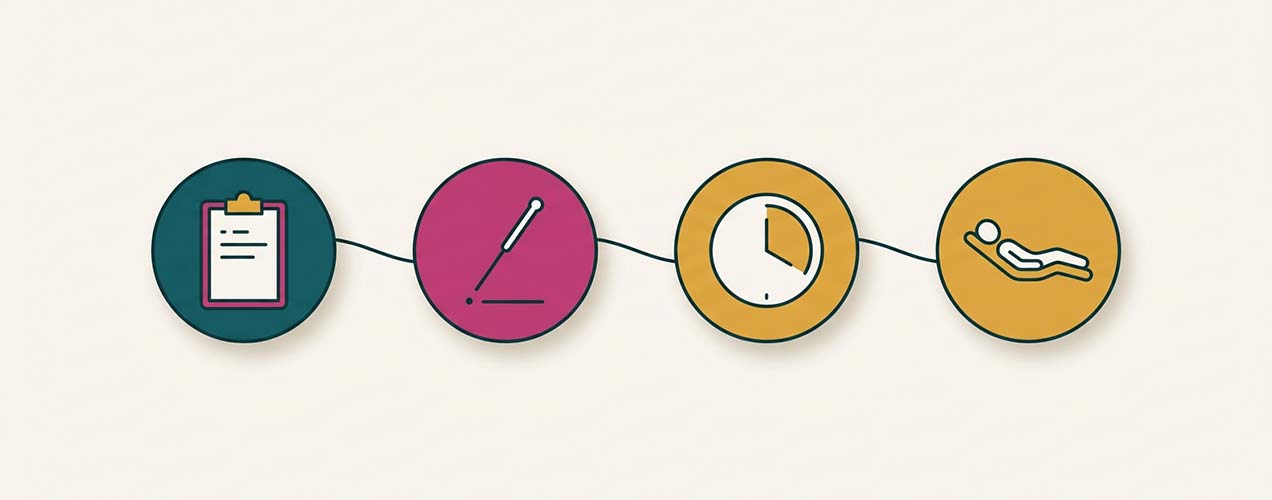
A first visit starts with an intake: questions about your health history, your main concern, sleep, digestion and stress, sometimes a look at the tongue and pulse. The practitioner then places thin, single-use needles at chosen points. The needle is fine and solid rather than hollow, roughly the gauge of a thick hair, which is why insertion is usually felt as a small prick or nothing at all.
Many people feel a dull ache, warmth or heaviness around a point once the needle is in. In Chinese medicine, this sensation is called de qi and is taken as a sign the point has engaged. Needles typically stay in for fifteen to thirty minutes while you rest. An initial appointment runs longer because of the intake; follow-ups are shorter. How many visits you need depends on the problem: an acute issue may settle in a few, a long-standing one is usually worked through over a series.
Safety, And Who Should Take Care
Performed by a trained practitioner with sterile, single-use needles, acupuncture is considered safe and serious problems are rare. One review of the literature put serious adverse events at roughly 0.04 to 0.08 per 10,000 treatments, and two large UK surveys covering more than 65,000 treatments recorded no serious events at all. The common side effects are minor: a little bruising, soreness or bleeding at the needle site, and sometimes brief dizziness or tiredness.
Worth a word of caution in a few situations:
- Bleeding disorders or blood thinners. Tell your practitioner that minor bleeding and bruising are more likely.
- Pregnancy. Reviews find serious events very rare, but some points are traditionally avoided, so the practitioner should know you are pregnant.
- Needle handling. Rare serious harms such as a punctured lung have been linked to poor technique, which is exactly why registration and training matter.
What acupuncture is not
Acupuncture does not replace a medical diagnosis or treatment. It is best thought of as a complement to conventional care, not a substitute for it. If you have serious, sudden or worsening symptoms, see a physician first. Use this page to understand the therapy, not to self-diagnose.
For the practical side, what a session costs and how coverage works, see acupuncture in Calgary: what to know before you book, and for finding a registered practitioner near you, where to find acupuncture across Calgary.
Common Questions
It depends on the condition. For chronic pain and migraine the evidence is reasonably solid that it helps beyond no treatment. For several other uses it performs about as well as a placebo needle, which is why researchers still debate it. Treat it as a therapy with real but selective support.
Usually very little. The needles are thin and solid, so insertion tends to feel like a small prick or nothing. A dull ache or heaviness around the point afterwards is normal and is not the same as pain.
There is no fixed number. Some people feel a shift within a few visits, while long-standing problems are typically treated over a longer series. A practitioner should give you a rough plan after the first assessment.
For a trained practitioner using single-use sterile needles, yes, with serious events rare and side effects usually limited to minor bruising or soreness. Mention any bleeding disorder, blood thinner or pregnancy beforehand.
No. It is a complement to conventional treatment, not a replacement. Keep seeing your physician for diagnosis and for anything serious.